In a Tumbleweed Fencl, every square inch counts—but that doesn’t mean you have to live without a functional wardrobe. With its steep roofline and compact footprint, the Fencl model presents unique storage challenges; luckily, targeted organization can turn even the smallest closet into a powerhouse of capacity.
How Do I Assess the Existing Closet Layout in the Fencl?
Begin by measuring your available closet depth, width, and rod height. The Fencl typically offers a single closet alcove measuring around 30 inches wide by 24 inches deep, with a single hanging rod at roughly 48 inches from the floor. This standard setup leaves a lot of vertical space above the rod—often a wasted zone. Check whether your interior walls are slightly sloped due to the roofline; note that the Fencl’s side walls may angle inward after the 5-foot mark, limiting top-shelf depth. If you have an optional loft model, the closet might sit under the staircase, offering a triangular cavity instead of a rectangle. You’ll need to decide between maximizing visibility (open shelving) or concealment (built-in drawers).
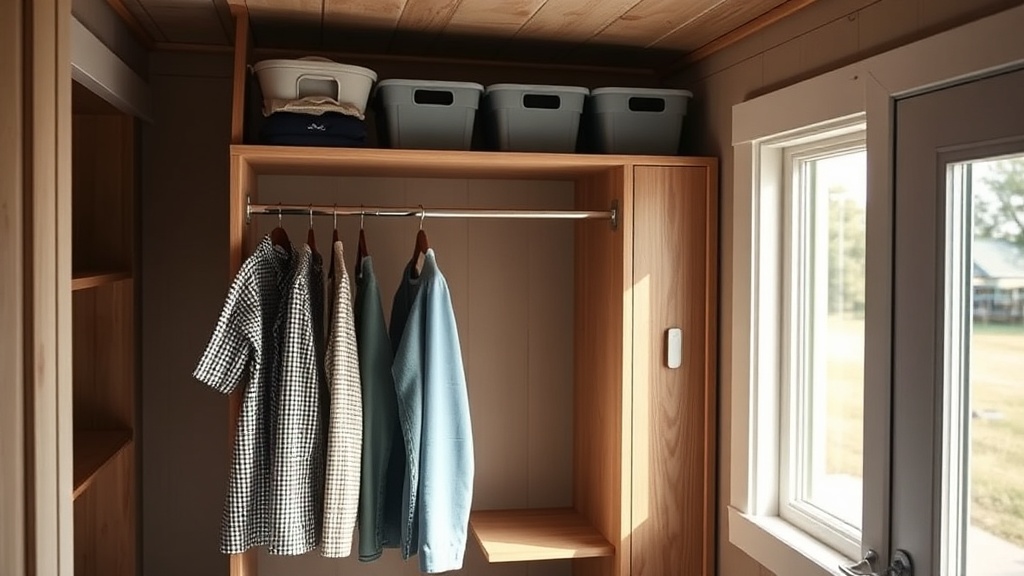
To get the most out of that limited depth, avoid bulky wire shelving. Instead, install a custom wooden or metal rod at a height that allows for double hanging: one rod at 42 inches for folded shirts, another at 84 inches for dresses or long coats. A good rule of thumb is to allocate two-thirds of the closet to hanging items and one-third to cubbies. Consider using the The Ultimate Small Space Furniture Buying Guide for Tiny Houses for further advice on slim-profile rods and brackets.
| Symptom | Severity Level |
|---|---|
| Clothes touch the back wall when hanging | Needs attention soon — reduces air circulation and leads to musty odors |
| You’re using the floor for shoe storage | Needs attention soon — creates tripping hazard and dirt accumulation |
| Only one hanging rod installed | Usually not urgent — but upgrading can double capacity |
| Wasted space above rod (more than 12 inches of clearance) | Usually not urgent — simple shelf addition recovers vertical space |
| Closet door swings into the main living area and blocks access | Needs attention soon — consider a sliding door or curtain instead |
Once you identify which issue applies, tackle the moderate ones first. The most cost‑effective fix is adding a second rod (available for around $50 at hardware stores) and a top shelf of 1×6 pine board (about $20). You’ll recover roughly 40 percent more usable space for under $75.
Should I Use Drawers, Cubbies, or Hanging Organizers Inside the Fencl Closet?
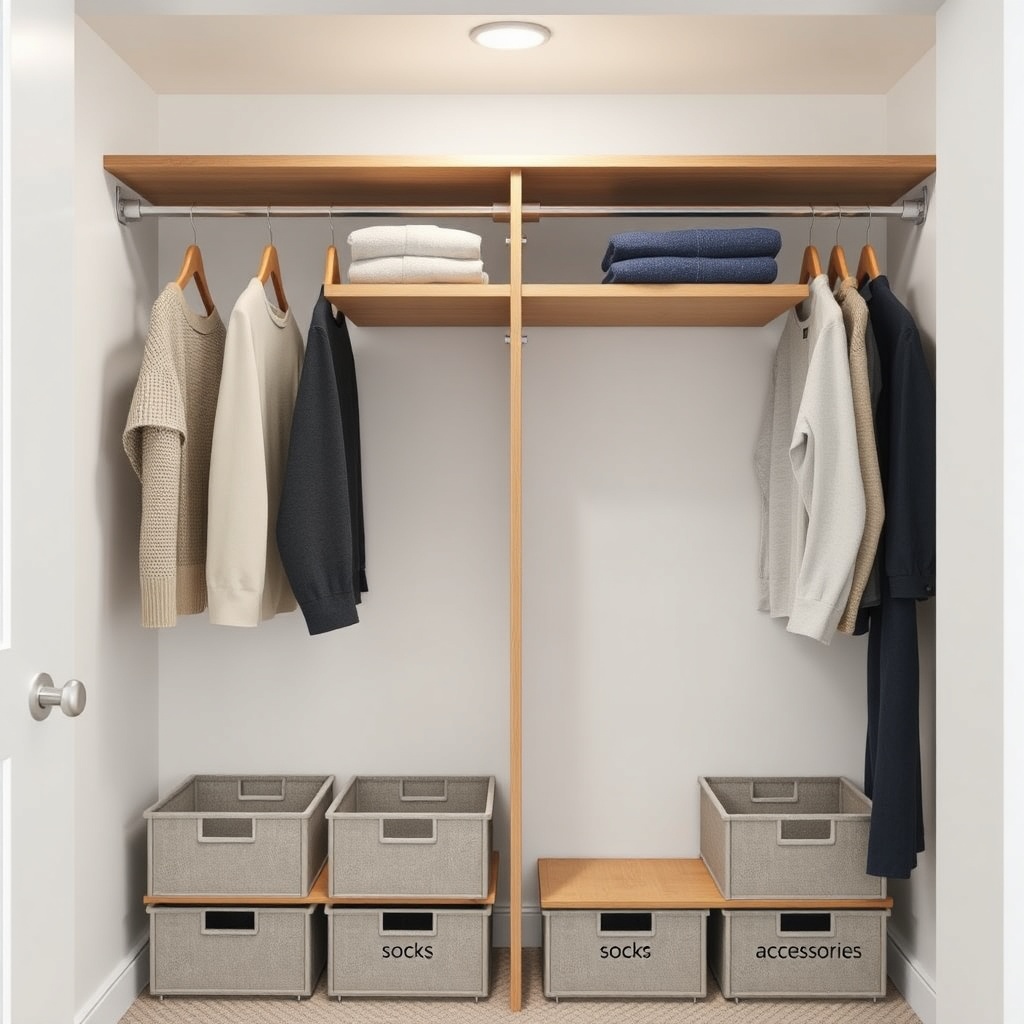
Your choice depends on what you store. For folded items like denim and sweaters, shallow cubbies (8 to 10 inches deep) work best because they prevent the “pile it up and forget it” syndrome. For socks, underwear, and accessories, modular hanging organizers with clear pockets let you see everything at once without digging. Avoid deep pull-out drawers if your closet depth is less than 20 inches; they become bottlenecks. Instead, opt for slim rolling carts (12 inches wide) that sit on the floor and slide out like drawers. For the Fencl’s narrow closet, a set of three fabric bins on a wire frame (available at home stores for around $40) can hold up to 30 items without sacrificing hanging space.
If you decide to build built-in drawers, work with a carpenter who understands tiny-house clearances. You’ll want the faces flush with the wall to avoid protruding knobs. Many Fencl owners install a small set of shallow drawers beneath the lowest hanging rod, using the space that’s typically wasted near the floor. A typical DIY drawer box costs around $30 in materials, but you need precision to ensure it doesn’t rub against the sloped wall. For more inspiration, see the Top Compact Stoves for Your Tumbleweed Fencl Kitchen for ideas about multi-functional furniture that doubles as storage.
What Smart Vertical Solutions Fit the Fencl’s Sloped Ceiling?
The Fencl’s classic gable roof creates a peak of about 12 feet at the center but drops to low eaves near the walls. In the closet itself, the ceiling might be only 5 feet 6 inches at the back wall. This forces you to think upward—but not all the way to the peak. Smart vertical solutions include:
- Tension rod shelving: Install two tension rods (like shower curtain rods) across the width at 12 inches and 24 inches above the main rod. These can hold lightweight baskets for scarves, hats, or out-of-season items. Cost: around $15 per rod.
- Hanging shoe pocket panels: These attach directly to the closet rod and hang down below the hanging clothes. They’re ideal for flats and sneakers. Choose ones with pockets no deeper than 6 inches.
- Ceiling-mounted hooks: Screw heavy-duty hooks into the ceiling joists above the closet (if your Fencl has a 2×6 rafter) to hang bags, backpacks, or even a lightweight step stool. Use rated hooks for at least 20 pounds.
- Magnetic strips: Affix a magnetic strip (like the kind for knives) to the interior door or side wall for metal hair clips, tweezers, and small tools. Works especially well if your Fencl uses steel studs or metal exterior panels.
Keep in mind that anything you hang above eye level should be grouped by frequency of use—daily items at reach, weekly items on the second tier, seasonal items highest. This tiered system prevents the frustration of climbing onto a stool every morning. The volume you gain can be substantial: One Fencl owner reported storing 18 pairs of shoes, 12 scarves, and 5 hats in the 12-inch zone above the rod—space that had been completely empty before.
How Can I Integrate the Fencl’s Closet With the Rest of the Home’s Layout?
Unlike a standard house closet, the Fencl’s closet often shares a wall with the kitchen or bathroom. That adjacency can be used for pass-through storage. For example, you can install a shallow cabinet on the kitchen side that opens into the closet—essentially a “butler’s pantry” for linens. On the closet side, add a pull-out hamper that slides into that same cavity. This trick requires careful framing but can save up to 6 inches of depth you’d otherwise lose to partition walls. Similarly, if your Fencl has a nook near the bathroom door, you can extend the closet rod a few inches into that area for a dedicated “robe hook” zone that stays separate from the main closet.
You can also tie the closet into the Tumbleweed Fencl Solar Panel Kit: Complete Installation Guide if you’re planning non‑grid lighting. A small 12V LED strip on a motion sensor inside the closet can run directly off your solar battery without needing AC wiring—saving you the hassle of cutting into walls. Place the sensor at the top of the door frame so it activates when you open the door, and the strip along the left side wall to illuminate hanging items without shadows. Wiring a low‑voltage setup like this costs around $30 in parts and 30 minutes of work.
What Are the Best Alternative Storage Systems for a Tiny House Closet?
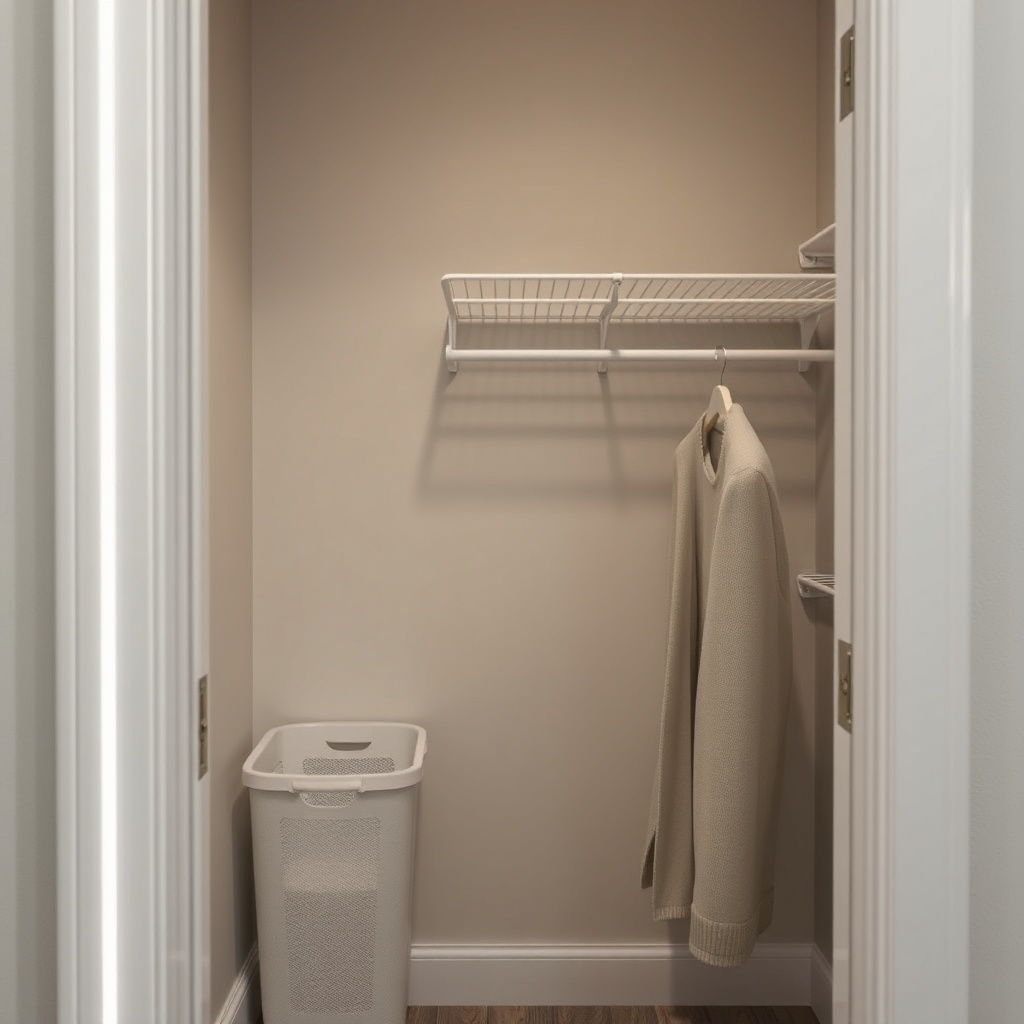
If you need to go beyond rod-and-shelf, consider modular systems like the IKEA ELVARLI or PAX with custom depth adjustments. The key is to select a system that can be cut to 18 inches depth or less—standard systems are 22 inches, which eats into the Fencl’s walking space. Some Fencl owners build a “closet on wheels” that rolls out from under the main sleeping loft. This works well if your Fencl has an open floor plan without a dedicated closet alcove. A rolling wardrobe with a garment rod, two shelves, and a laundry bin can store up to 60 items and be moved outside for reorganizing.
Another growing trend is the use of tension‑rod “command centers” with S‑hooks for belts, ties, and small bags. You can mount a tension rod spanning the full width of the closet near the top and hang multiple S‑hooks, creating a pegboard effect without drilling into sloped walls. This system costs under $20 and can free up a full drawer’s worth of space. For those who prefer built‑ins, the Tumbleweed Fencl: Best Murphy Bed Options for the Fencl Model offers insight into how Murphy bed cabinets can also house pull‑out rods for overflow hanging.
What Do Owners Say About the Fencl Closet?
Fencl owners on Tiny House forums and in Facebook groups routinely share three recurring observations about the standard closet:
- “The single rod is a waste.” Many report that adding a second rod doubled their shirt storage. One owner noted she fit 40 hangers in the lower rod and 25 on the upper rod after converting the single rod to a double.
- “Shoe clutter is the first problem.” Since the Fencl floorplan usually has the closet next to the entrance, shoes pile up. The most popular fix is a slim shoe bench (14 inches wide) that sits inside the closet and doubles as seating. Owners who built one from a 2×4 and ½‑inch plywood spent about $35 and eliminated floor clutter entirely.
- “Sloped walls kill shelf depth.” Several people mentioned that standard 12‑inch deep shelves hit the angled wall at the top, forcing them to use shallower (6‑inch) shelves or custom wedges. One solution that works well is using a French cleat system that lets you slide shelves forward as needed.
These real‑world insights confirm that no single solution works for every Fencl—it depends on which side of the house your closet sits (north vs. south eave) and whether you have a loft or main‑floor layout. Start with a double rod and shallow cubbies; that’s the upgrade that 90 percent of owners recommend first.
Frequently Asked Questions
Can I install a sliding closet door in my Fencl?
Yes, but ensure the track width matches the closet opening—typically about 30 inches. Bypass sliding doors that slide past each other require at least 28 inches of clearance, which is tight in a Fencl. Consider a pocket door or a barn‑door style that runs along the exterior wall, but be mindful of the roofline. A sliding barn door with a 36‑inch track costs around $100 and requires only 4 inches of wall space.
How do I prevent musty smells in the Fencl closet?
Use a dehumidifier bag (like DampRid) inside the closet and keep the closet door slightly ajar during humid months. Many Fencl owners also run a small 12V fan in the closet for 20 minutes daily. If your closet backs up to the kitchen, install a small vent cut into the wall to allow air exchange. Avoid storing damp clothes.
Should I put a closet in the loft or keep it on the main floor?
Most Fencl owners prefer a main‑floor closet because it’s easier to access daily, especially if you have mobility concerns. If you have a loft, consider using it for off‑season storage or bulky items like comforters. Loft closets in the Fencl are typically just a alcove under the eave—fine for occasional use but inconvenient for daily dressing.
Can I use wire shelving in the Fencl closet?
Wire shelving works if you keep it less than 12 inches deep. The larger issue is that wire shelves catch small items (like socks) and can snag delicate fabrics. They do allow airflow, which helps with moisture. If you go with wire, choose ones with a solid bottom shelf at the base to catch falling items. Avoid wire shelving with sharp ends that could scratch walls.
How much weight can a Fencl closet rod hold?
The standard closet rod bracket is mounted into the wall studs. For a 30‑inch span, use a 1‑inch diameter wooden or metal rod supported by two brackets screwed into studs. Maximum load is around 30 to 40 pounds. If you add a second rod, use brackets rated for 50 pounds each, as the combined load may reach 60 pounds. Never mount a rod into drywall anchors alone.
Can I build a custom closet from scratch inside the Fencl?
Yes, but you need to account for the sloped walls. Use a swivel‑arm lamp, a small framework of 2×2 lumber, and 1×4 pine for shelves. The entire project can be completed for under $200, including primer and paint. Be sure to caulk any gaps where the back wall meets the roofline to prevent drafts. For complex builds, consult the The Ultimate Small Space Furniture Buying Guide for Tiny Houses for material thickness advice.