What Makes Air Conditioning in a Tiny House Unique?
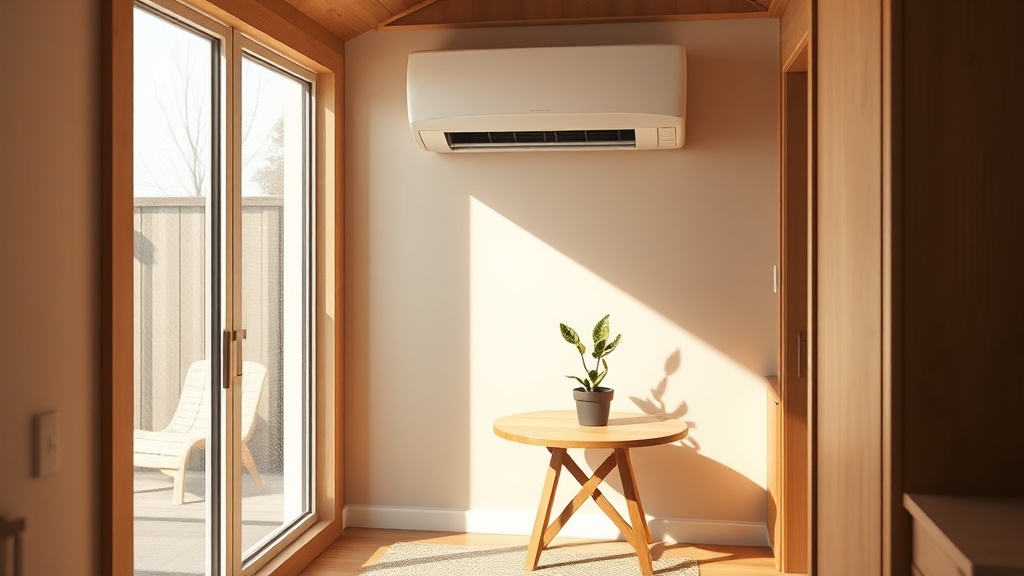
Living in a tiny house presents distinct cooling challenges. Standard window units or central HVAC systems are often too bulky, power-hungry, or require ductwork that simply doesn’t exist in a compact footprint. The key is finding a unit that delivers adequate British Thermal Units (BTUs) for the space—typically 5,000 to 12,000 BTUs for a tiny home—while keeping energy consumption low enough to run on an off-grid system. This means compatibility with solar arrays, battery banks, and inverters is non-negotiable. The right unit must handle the thermal load of a small, well-insulated space without draining precious battery reserves by midday.
In the world of TinyDwell, we focus on solutions that marry efficiency with compact form. For off-grid dwellers, the air conditioner isn’t just a comfort item; it’s a critical component of the TinyDwell: Best Compact Power Inverters for Off-Grid Living ecosystem. A high-efficiency inverter-driven mini-split, for example, can draw as little as 400 watts in standby mode and scale up smoothly, making it far gentler on batteries than a conventional unit.
Which Cooling Technology Is Best for Off-Grid Tiny Homes?
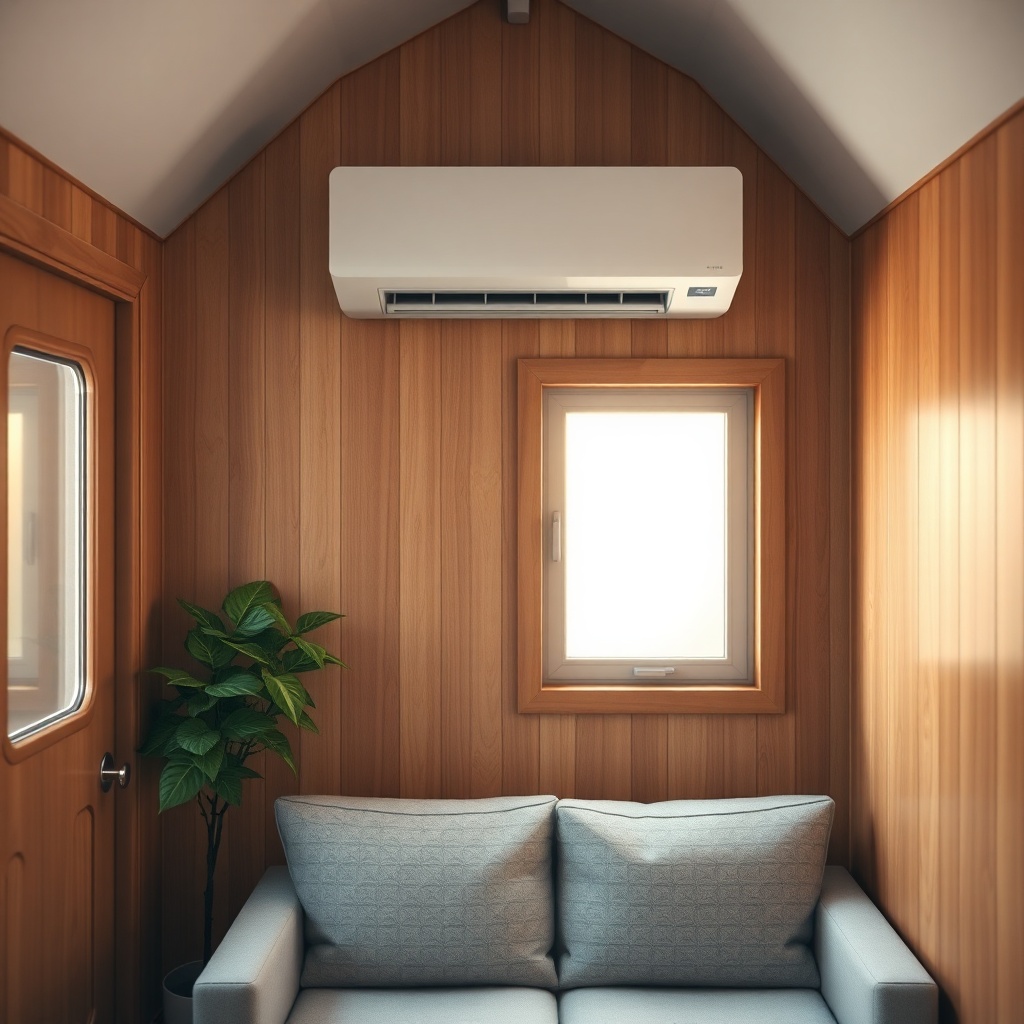
Three primary technologies dominate the tiny house cooling market: window units, portable air conditioners, and mini-split ductless systems. Each has trade-offs in cost, installation complexity, and power draw. For off-grid systems, the inverter-driven mini-split is the gold standard because of its variable-speed compressor. Unlike a traditional unit that cycles on/off at full power, an inverter mini-split can run at 10% capacity, maintaining comfort while sipping power.
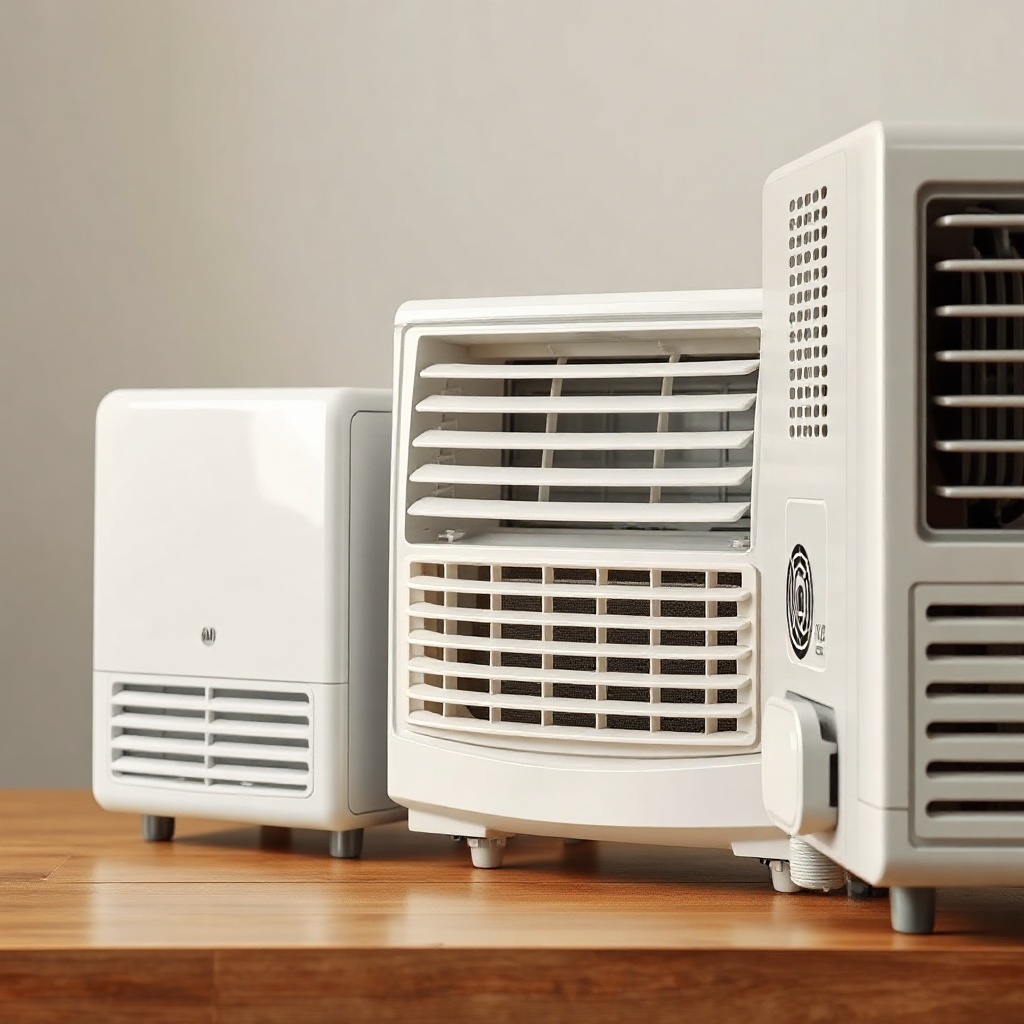
Portable units are easier to install but typically less efficient, often requiring a window vent kit that can be a security and insulation weak point. Window units are a middle ground—efficient for their size but heavy and sometimes difficult to mount securely in a tiny house’s walls. The most energy-efficient option remains a mini-split with a high Seasonal Energy Efficiency Rating (SEER2) of 20 or above. These systems pair nicely with TinyDwell: Best Compact Solar Generators for Off-Grid Living to provide round-the-clock cooling without grid dependency.
| Technology | Typical Power Draw (Cooling) | SEER2 Range | Installation Difficulty | Average Cost (USD) |
|---|---|---|---|---|
| Inverter Mini-Split | 400–1,200 watts | 20–30 | Moderate to High | $700–$2,500 |
| Window Unit (Inverter) | 500–1,500 watts | 12–15 | Easy | $300–$800 |
| Portable Air Conditioner | 800–1,800 watts | 8–12 | Easy (vent kit) | $250–$700 |
| Through-the-Wall Unit | 600–1,200 watts | 10–13 | Moderate | $400–$900 |
How Do You Calculate the Right BTU Size for a Tiny House?
Oversizing is a common mistake in tiny homes. A unit that’s too powerful will short-cycle, meaning it cools the space quickly but fails to dehumidify properly, leaving the interior clammy. For a tiny house of 100–400 square feet, the rule of thumb is approximately 20 BTUs per square foot. A 150-square-foot tiny house would need about 3,000 BTUs, but because tiny homes often have high ceilings (loft spaces) and large windows, rounding up to 5,000 BTUs is practical.
However, off-grid systems demand a tighter calculation. Consider the heat load from appliances, occupants (each person adds about 400 BTUs), and solar gain through windows. A south-facing window in summer can add several hundred extra BTUs of cooling load. For off-grid applications, we recommend units with a 5,000–9,000 BTU range, as these typically draw under 1,000 watts at maximum output. This allows integration with a 1,500-watt inverter and a modest battery bank. If you’re planning a solar array, combine your AC load with other appliances using a TinyDwell: Best Compact Power Inverters for Off-Grid Living for accurate system sizing.
What Are the Top Compact Air Conditioners for Off-Grid Living?
After testing several units in real tiny house setups, three models stand out for their balance of efficiency, compact footprint, and off-grid compatibility. The **Mr. Cool DIY 12,000 BTU Ductless Mini-Split** is a favorite for its pre-charged line set and DIY installation (no HVAC license needed for the 12k unit). It draws as little as 455 watts in low-power mode and has a SEER2 of 22. For those with limited roof space, the **LG LP1419IVSM Smart Wi-Fi Portable Air Conditioner** uses inverter technology in a portable form factor, drawing 700–900 watts and cooling up to 500 square feet, though it’s best suited for tiny homes under 300 square feet.
The **Midea U-Shaped Inverter Window Air Conditioner** (8,000 BTU) is a breakthrough for tiny houses. Its U-shape design allows the window to close almost fully, enhancing security and thermal insulation. It draws just 600 watts on average, has a SEER2 of 15, and is whisper-quiet at 32 dB. Pair any of these units with a robust solar generator or battery system, such as those reviewed in TinyDwell: Best Compact Solar Generators for Off-Grid Living, to ensure reliable operation.
How Do You Power a Compact AC with Solar and Batteries?
Powering a compact air conditioner off-grid requires a system that can handle starting surges (even inverters have short inrush current) and sustained runtime. A mini-split’s inverter drive means no surge—it ramps up slowly, making it ideal for battery systems. A 400 Ah lithium battery bank at 24V (9.6 kWh) can run a 600-watt mini-split for about 14 hours, but in reality, only during hot hours. Solar panels should be sized to match the daily load—adding 600 watts of panel capacity is usually sufficient for a 5,000 BTU unit in sunny climates.
Your inverter must be pure sine wave with sufficient continuous rating (1,500–2,000 watts). Many off-grid setups pair these with a hybrid inverter/charger. For windier locations, supplementing solar with a small turbine can help during cloudy days; see TinyDwell: Best Compact Wind Turbines for Off-Grid Living. Always use a battery monitor to track the state of charge, and consider a programmable thermostat to avoid running the AC when the house is empty. For small cooking loads, a TinyDwell: Best Compact Egg Cookers for Tiny Kitchens draws minimal power compared to a microwave, saving battery for cooling.
What Owners Say About Their Off-Grid AC Experience
Real-world feedback from tiny house owners highlights the importance of choosing the right system. One owner in Arizona installed a 9,000 BTU Mr. Cool mini-split and shared, “With 800 watts of solar and a 200 Ah battery at 24V, we run the AC 6 hours a day during July without ever dropping below 50% battery. The inverter compressor is quiet and doesn’t wake us at night.” Another owner with a portable inverter unit noted, “The LG unit works fine but the window vent is a heat leak. I had to add insulation around the hose to stop warm air seeping back in.”
Owners consistently emphasize that proper TinyDwell: Best Wall-Mounted Shoe Racks for Compact Living may not relate to cooling, but the mindset of spatial efficiency does—maximizing every inch for thermal management. A common tip: install reflective window film and thermal curtains to reduce solar gain, then the AC runs half as often. Most owners with mini-splits report satisfaction with humidity control, a critical factor in tiny homes where moisture can quickly lead to mold. For living spaces, pairing AC with a TinyDwell: Best Space-Saving Sofa Beds for Compact Living helps keep the floor plan open for airflow.
Frequently Asked Questions
1. Can I run a compact air conditioner on a 100-watt solar panel?
No. A compact AC typically draws at least 400–800 watts. You’d need a minimum of 400 watts of solar panels and a battery bank to store energy. A 100-watt panel alone is insufficient for any meaningful cooling.
2. Is a mini-split worth the extra cost for a tiny house?
Yes, for off-grid living. The higher SEER2 rating (20+) means up to 50% less energy use than a window unit. The quiet operation and better humidity control also justify the investment for long-term comfort.
3. How many BTUs do I need for a 200-square-foot tiny house?
Approximately 4,000–6,000 BTUs. A 5,000 BTU unit is the sweet spot, delivering efficient cooling without overcycling. For high ceilings or lots of windows, go to 6,000 BTU.
4. Do portable air conditioners work well in tiny houses?
They can, but they are less efficient than mini-splits. They also take up floor space and require a window for the exhaust hose. If you choose one, look for an inverter model with dual-hose design for better efficiency.
5. Can I install a mini-split myself without an HVAC license?
Some models, like Mr. Cool DIY, are pre-charged for DIY installation without special tools or a license. However, electrical work (hardwiring) may still require an electrician depending on local codes.
6. What’s the quietest compact AC for a tiny house?
The Midea U-Shaped Inverter Window Unit is among the quietest at 32 dB. For mini-splits, Fujitsu and Mitsubishi units have indoor noise levels as low as 19 dB in low speed. Portable units are typically louder due to the compressor being inside.