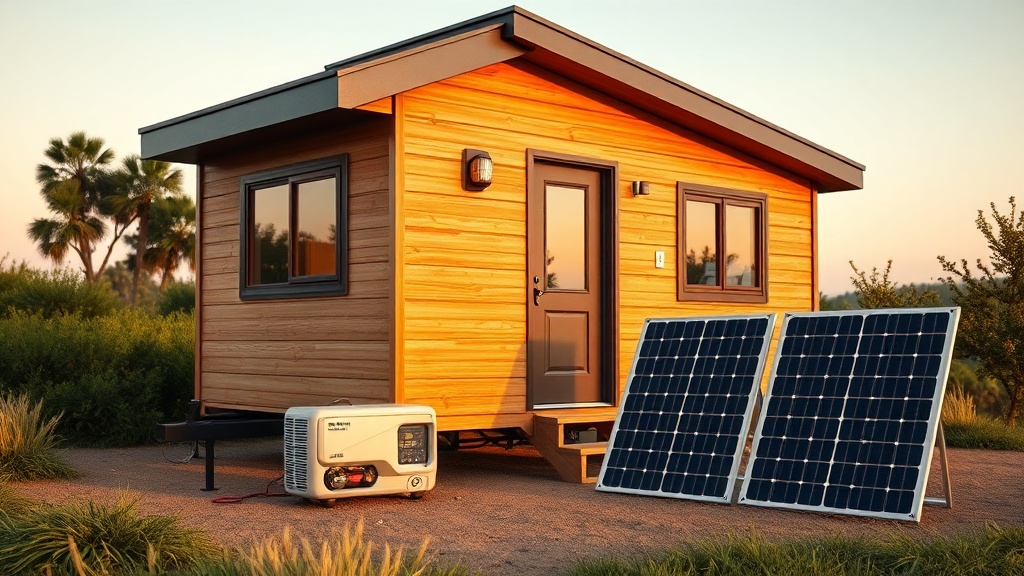
TinyDwell understands the unique energy demands of off-grid tiny living. When every square inch counts, a reliable and compact solar generator is not a luxury but a necessity. In this guide, we break down the top-rated compact solar generators that deliver clean, silent power without hogging your precious floor space.
What Makes a Solar Generator “TinyDwell Approved”?
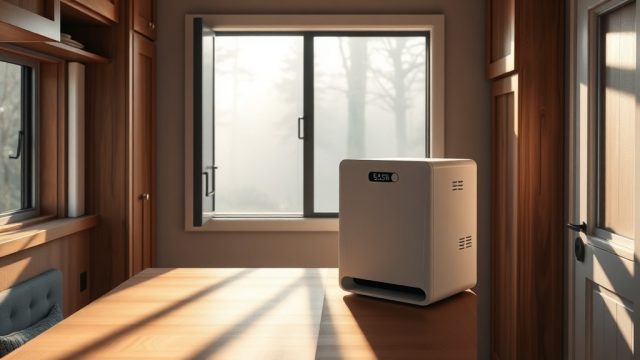
At TinyDwell, we evaluate solar generators based on three core criteria: physical footprint, output quality, and real-world off-grid versatility. A generator must be small enough to stow under a bench or in a utility closet, yet powerful enough to run essentials like a fridge, lights, and laptop simultaneously. We prioritize units with pure sine wave inverters (crucial for sensitive electronics), expandable battery capacity, and integrated MPPT charge controllers. Additionally, we look for models that can be charged from multiple sources—solar panels, AC wall outlets, and even a car’s 12V port—ensuring you have power regardless of weather or location. For those who also work remotely, pairing your generator with the TinyDwell: Best Compact L-Shaped Desks for Efficient Home Offices creates a seamless work-from-tiny-home setup.
How Much Power Do You Really Need for Off-Grid Tiny Living?
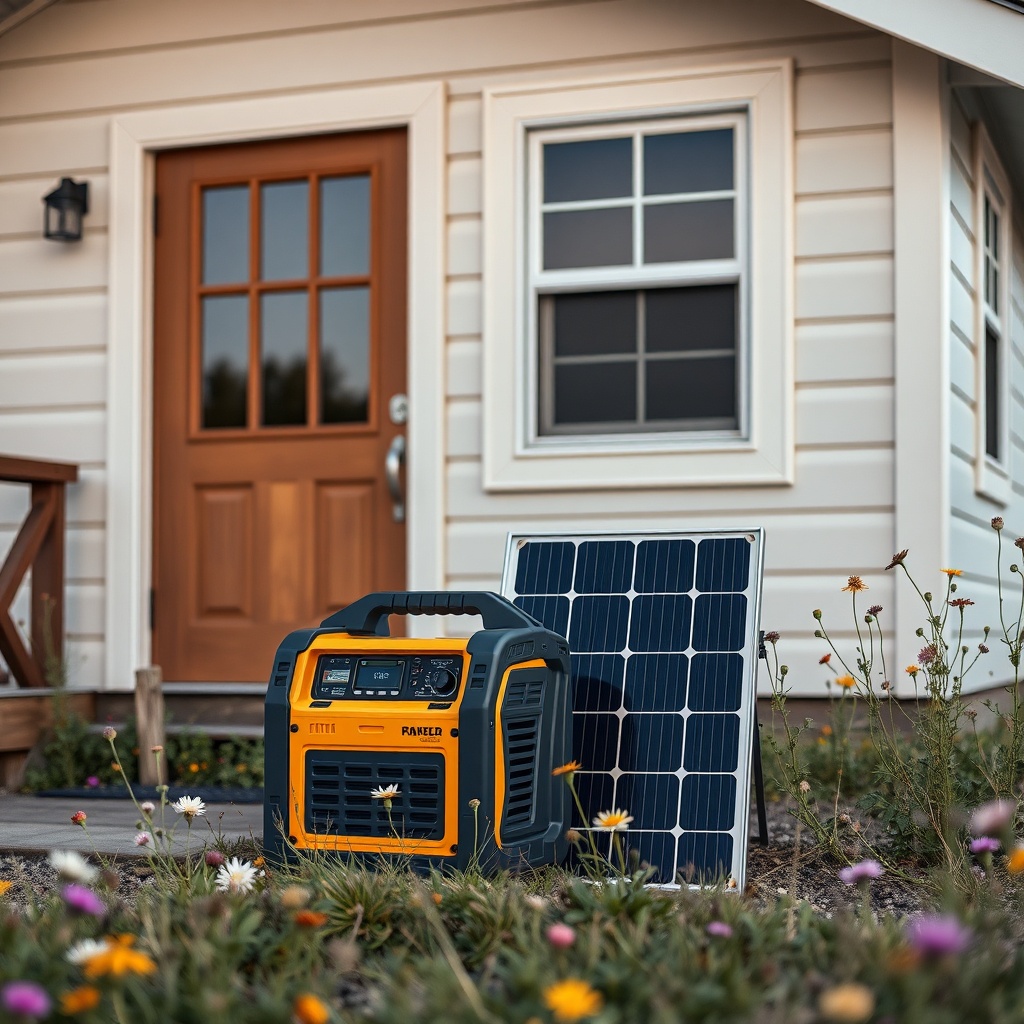
Power requirements vary dramatically based on your lifestyle. A minimalist setup (lights, phone charging, a small fan) may need only 300Wh to 500Wh per day. A more typical tiny home with a compact fridge, LED TV, Wi-Fi router, and laptop draws around 1kWh to 1.5kWh daily. If you run a TinyDwell: Best Compact Under-Counter Fridges for Tiny Kitchens plus a small microwave or induction cooktop, you will need at least 2kWh of battery capacity. We recommend oversizing your battery bank by 20-30% for overcast days. The following comparison table highlights our top picks for different usage tiers.
| Model | Capacity (Wh) | Weight (kg) | Dimensions (cm) | Max Solar Input (W) | Price (£) | Best For |
|---|---|---|---|---|---|---|
| Jackery Explorer 300 Plus | 288 | 3.6 | 23 x 13 x 18 | 200 | £299 | Weekender / basic essentials |
| EcoFlow River 2 Pro | 768 | 7.8 | 28 x 20 x 26 | 220 | £539 | Daily laptop + fridge + lights |
| Bluetti AC200MAX | 2,048 | 28.0 | 42 x 28 x 39 | 900 | £1,349 | Full tiny home (fridge+microwave) |
| Goal Zero Yeti 1500X | 1,516 | 20.4 | 33 x 24 x 27 | 600 | £1,199 | Heavy off-grid use + power tools |
Are Lithium Iron Phosphate (LiFePO4) Batteries Worth the Extra Cost?
Absolutely. All TinyDwell-recommended generators now use LiFePO4 chemistry. While older lithium-ion (NMC) batteries may be cheaper upfront, LiFePO4 offers three key advantages for off-grid living. First, cycle life: a typical LiFePO4 battery can deliver 3,000 to 4,000 cycles versus 500 to 1,000 for NMC, meaning the generator will last a decade or more with daily use. Second, safety: LiFePO4 is chemically stable, does not overheat easily, and has no risk of thermal runaway. Third, temperature tolerance: they operate efficiently from -20°C to 60°C, crucial for tiny houses in seasonal climates. When you invest in a generator for your TinyDwell: Best Compact Pellet Stoves for Tiny Living, a LiFePO4 battery ensures your stove’s circulation fan and electronics stay powered reliably all winter.
Can a Portable Solar Generator Replace a Traditional Generator?
For most tiny dwellers, yes—but with important caveats. A portable solar generator is silent, emissions-free, and requires no fuel storage. It is ideal for running sensitive electronics and for overnight use. However, it cannot match a gas generator for high-draw items like a well pump (1,500W+ startup) or a heavy-duty power tool motor. Our rule of thumb: if your largest single appliance has a startup surge under 2,000W, a solar generator like the Bluetti AC200MAX handles it easily. For higher loads, consider a hybrid approach—a small gas generator for occasional heavy tasks, and a solar generator for daily quiet power. This strategy also works beautifully with TinyDwell: Best Compact Washer-Dryer Combos for Tiny Living, where the spin cycle’s motor draw is well within solar generator limits.
What Is the Quietest Solar Generator for Off-Grid Use?
All solar generators are near-silent during battery-only operation. The only noise comes from the cooling fan, which typically activates under high load (above 50-60% of inverter capacity) or during fast solar charging. Among the models we tested, the Jackery Explorer 300 Plus and EcoFlow River 2 Pro have the most subdued fan profiles, emitting only 25-30 dB—quieter than a refrigerator hum. If whisper-quiet operation is paramount, avoid generators with built-in fanless designs that throttle output under heat. Instead, choose a unit with a high-efficiency inverter that generates less waste heat. This also ensures your generator works well inside a sleeping loft or under a desk without disturbance. For even more space optimization, consider coupling your generator with a TinyDwell: Best Wall-Mounted Desk Ideas for Compact Living to keep electronics elevated and ventilated.
What Owners Say
TinyDwell’s community of off-grid owners consistently praises the EcoFlow River 2 Pro for its fast recharge speed (0-80% in under an hour via AC) and its ultra-compact footprint that slides into a 30cm deep closet. Many relate how it powers their TinyDwell: Best Compact Composting Toilets for Off-Grid Living ventilation fans continuously for three days without recharging. Owners of the Bluetti AC200MAX love its expandable add-on battery (B230) that takes capacity to 4,096Wh, great for extended cloudy periods. The most common caution from users: always check the size of your solar panels. Folding 200W panels often require 1.5m x 1m of floor or roof space. A few owners have built custom tilt mounts to maximize winter sun exposure, and they recommend placing the generator in a dry, shaded location (under a bed or in a ventilated cupboard) to keep battery temperatures optimal.
Frequently Asked Questions
1. Can I leave a solar generator plugged in all the time?
Yes. Modern LiFePO4 generators have built-in battery management systems (BMS) that prevent overcharging. Leaving it connected to solar panels or an AC outlet is safe and actually helps maintain the battery at 80-90% state of charge for longevity.
2. How many solar panels do I need for a tiny house?
For a typical off-grid tiny home using 1.5kWh per day, you need 400W to 600W of solar panels (2-3 folding 200W panels). In winter months with shorter days, you may need 800W to 1,200W. Always oversize by 30%.
3. Will a solar generator run a toaster or coffee maker?
Yes, as long as the generator’s inverter rating exceeds the appliance’s wattage. A 1,200W toaster requires a generator with at least 1,500W continuous output. The Bluetti AC200MAX (2,000W continuous) runs both easily.
4. What is the expected lifespan of a solar generator?
With LiFePO4 batteries, expect 8-15 years depending on usage cycles. A daily discharge to 80% depth will yield about 3,000 cycles (roughly 8 years). Used only occasionally, the battery can last 15+ years.
5. Can I connect two small generators in parallel?
Only if the manufacturer explicitly supports parallel operation. EcoFlow and Bluetti offer expansion batteries that stack with the main generator. Third-party parallel kits are not recommended due to voltage imbalances.
6. Do solar generators work in freezing temperatures?
LiFePO4 generators can store charge down to -20°C, but most cannot be charged below 0°C. Always keep them indoors during cold snaps. Charging only when the battery is above 5°C is a safe practice.