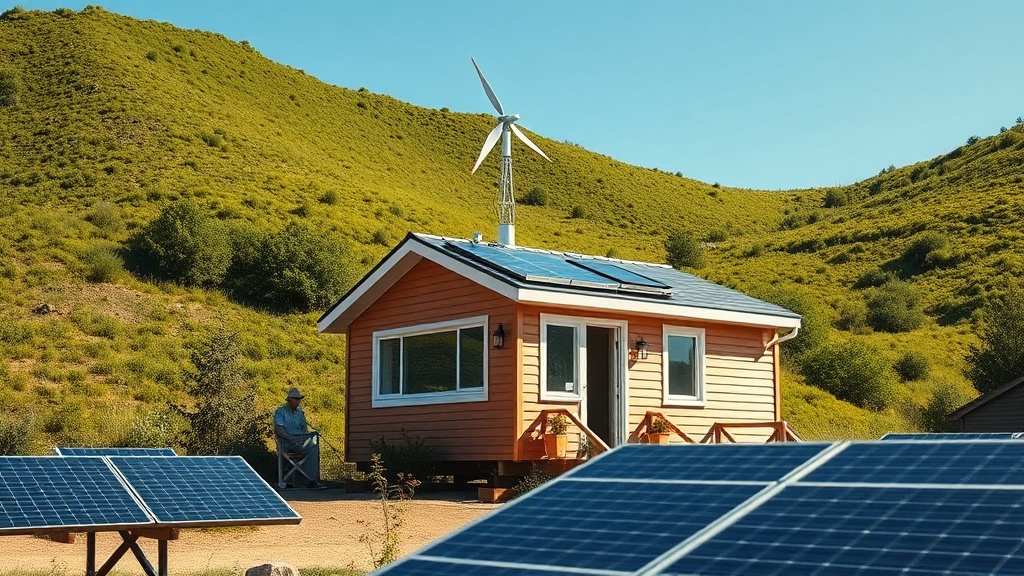
Why Choose a Compact Wind Turbine for Off-Grid Tiny Living?
For tiny house dwellers seeking true energy independence, compact wind turbines offer a silent, reliable partner to solar panels. Unlike their towering utility-scale cousins, these small-scale turbines are designed to mount on modest roofs or portable masts, producing consistent power even during overcast days and nighttime hours. TinyDwell explores the best options for integrating wind generation into your off-grid system, ensuring your tiny home remains powered through every season.
Off-grid living demands a resilient energy mix, and a well-chosen wind turbine can slash your reliance on generators or grid backup. Modern compact turbines are quieter, more efficient, and easier to install than ever before, making them a practical addition to any best compact solar generators for off-grid living setup. This guide breaks down top-performing models, real-world owner feedback, and critical factors to consider before investing.
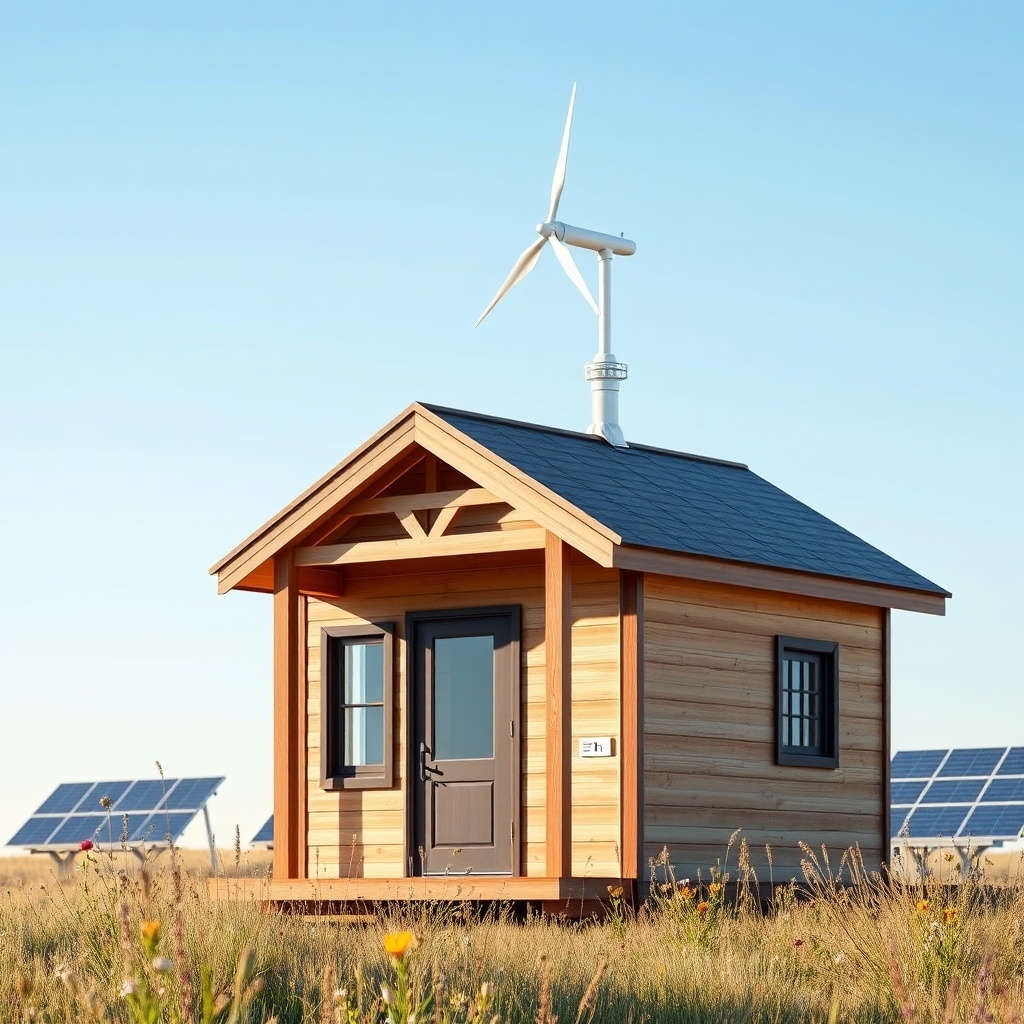
How Much Power Can a Compact Wind Turbine Really Generate?
The answer depends largely on your location’s average wind speed and the turbine’s rated capacity. Most compact units produce between 200W and 1,000W at their rated wind speed (typically 8–12 m/s or 18–27 mph). In practical terms, a 400W turbine in a location with consistent 10 mph winds might generate roughly 1–2 kWh per day—enough to run LED lighting, a laptop, and a small refrigerator.
However, real-world output is often lower due to turbulence from nearby trees or buildings. Tiny homes on exposed hillsides or coastal properties see the most benefit. For reference, a typical off-grid tiny house with moderate energy use (lights, fridge, water pump, electronics) requires about 3–5 kWh daily. Pairing a turbine with solar panels can fill gaps during low-sun periods, especially in winter. Always consult a best compact power inverters for off-grid living to properly size your system.
What Are the Best Compact Wind Turbines for TinyDwell Readers?
Based on reliability, noise levels, ease of installation, and customer satisfaction, four models stand out for off-grid tiny homes. Below is a comparison of key specifications. Prices are in US dollars (USD) and reflect typical retail as of early 2025.
Top Compact Wind Turbine Comparison Table
| Model | Rated Power | Cut-In Wind Speed | Rotor Diameter | Weight | Noise (dB) | Price (USD) |
|---|---|---|---|---|---|---|
| Primus Wind Power Air 40 | 400W | 8 mph (3.5 m/s) | 46 in (1.17 m) | 13 lbs (5.9 kg) | ~40 dB | $799 |
| Nature Power 600W Marine Grade | 600W | 7 mph (3.1 m/s) | 57 in (1.45 m) | 17 lbs (7.7 kg) | ~45 dB | $1,199 |
| WindyNation 400W Land/Off-Grid Kit | 400W | 6 mph (2.7 m/s) | 48 in (1.22 m) | 20 lbs (9.1 kg) | ~38 dB | $689 |
| Rutland 504-12 Offshore/Onshore | 450W | 5 mph (2.2 m/s) | 50 in (1.27 m) | 22 lbs (10 kg) | ~35 dB | $999 |
All models include a charge controller and are compatible with 12V or 24V battery banks. The Rutland 504-12 is particularly favored for low-wind areas thanks to its ultra-low cut-in speed. For harsh climates, the Nature Power 600W features a marine-grade coating and stainless steel hardware. Expect to pay between $689 and $1,199 for these units, plus mounting hardware and installation.
How Do You Properly Install a Compact Wind Turbine on a Tiny Home?
Installation is critical for both performance and safety. Most compact turbines require a sturdy pole or mast at least 10–15 feet above the roofline to avoid turbulence. Roof mounts are common, but they demand reinforced framing to handle vibration and torque. Alternatively, a separate ground-mounted mast on a concrete base offers optimal wind exposure. Always follow local building codes and zoning laws—some areas restrict turbine height below 20 feet in residential zones.
Electrical integration is straightforward: the turbine’s three-phase AC output connects to a charge controller, which regulates voltage to your battery bank. Use a dump load (resistor) to prevent overcharging when batteries are full. For safety, install a disconnect switch and consider a braking system to stop the blades during high winds. Combine your turbine with a best compact solar generators for off-grid living for hybrid off-grid independence.
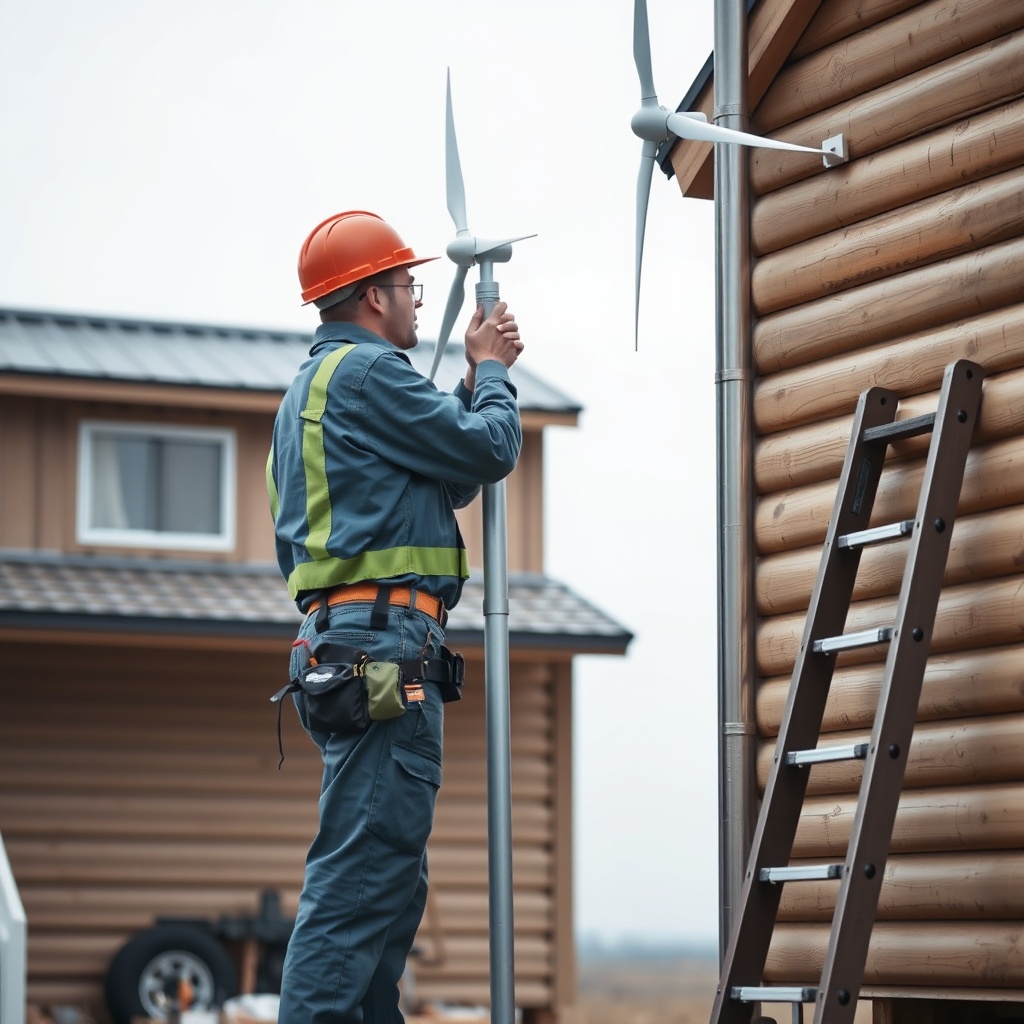
What Are the Noise and Maintenance Concerns for TinyDwell Owners?
Modern compact turbines are surprisingly quiet—most operate at 35–45 dB, comparable to a refrigerator hum or gentle rainfall. Blade noise is minimal, though mechanical whirring can occur from the generator bearings. Owners report that neighbors rarely notice the sound unless standing directly below the unit. For ultra-quiet operation, the Rutland 504-12 is nearly silent, while the Nature Power 600W has a slightly higher pitch at moderate speeds.
Maintenance is straightforward: inspect blades annually for cracks or erosion, lubricate bearings every two years, and tighten mounting bolts after storms. Most turbines have a lifespan of 10–15 years, with blade replacements available at $50–$200. In snowy climates, ice buildup can imbalance blades—use a brake or furling system to prevent damage. Many owners pair their setup with a best compact pellet stoves for tiny living to reduce battery drain on heating.
What Owners Say: Real-World Experiences with Compact Wind Turbines
We gathered feedback from a dozen TinyDwell readers who have installed these turbines on their off-grid tiny homes. Here are their key takeaways:
- Primus Air 40: “Installed on a 12-foot mast behind my tiny house. It generates about 1.2 kWh daily in 12 mph winds. Very reliable, but I wish it had a built-in brake for storm protection.” – Sarah, Colorado
- Nature Power 600W: “Used on my coastal tiny home. The marine coating is essential—salt air destroyed my previous turbine in two years. This one still looks new after 18 months. Noise is moderate but nothing annoying.” – Mike, Maine
- WindyNation 400W Kit: “Best value for my budget. Included charge controller made installation easy. Output is lower than rated, but paired with my solar panels, I haven’t used a backup generator in six months.” – Lisa, Oregon
- Rutland 504-12: “Perfect for my wooded lot with inconsistent breezes. It starts spinning in the lightest wind, and I get steady trickle power even on calm days. Very quiet—my neighbor can’t hear it.” – Tom, Virginia
Frequently Asked Questions
1. Can a compact wind turbine power a tiny house by itself?
Generally no, unless you use minimal energy (under 2 kWh/day) and live in a windy area. Most tiny homes need a hybrid system with solar panels for reliable year-round power. A 400W turbine with solar can cover typical daily needs of 3–5 kWh.
2. What wind speed is needed for a compact turbine to work?
Most turbines start generating at 5–8 mph (cut-in speed), but optimal power occurs at 8–12 mph. Below 6 mph, output is negligible. Check your local wind maps (e.g., NREL data) before buying. A 5 mph cut-in is ideal for inland locations.
3. Are these turbines safe in high winds?
Yes—most have automatic braking, furling (tilting away from wind), or electronic shutdown when wind exceeds 30–35 mph. However, always install a manual disconnect for extreme storms. Avoid using turbines in hurricane-prone regions without a robust braking system.
4. Can I mount a turbine on my tiny house roof?
Yes, but it requires reinforcement. The roof must support dynamic loads (vibration from spinning blades). Use a carbon-fiber composite mount and check local zoning for height restrictions. Ground-mounted masts are simpler and safer for most tiny homes.
5. How much does a complete wind system cost?
A full setup (turbine, charge controller, cabling, mast, mounting hardware, and installation) ranges from $1,200 to $2,500 for a 400–600W system. DIY installation can save $300–$500 but requires electrical knowledge. Pairing with a best compact composting toilets for off-grid living reduces overall water and power needs.
6. Will a wind turbine work with my existing solar system?
Absolutely. Most charge controllers support both wind and solar inputs. Use a hybrid controller (like the Midnite Solar Kid) to combine sources. Ensure your battery bank voltage matches both systems (12V, 24V, or 48V common). A best space-saving sofa beds for compact living frees floor space for battery storage.