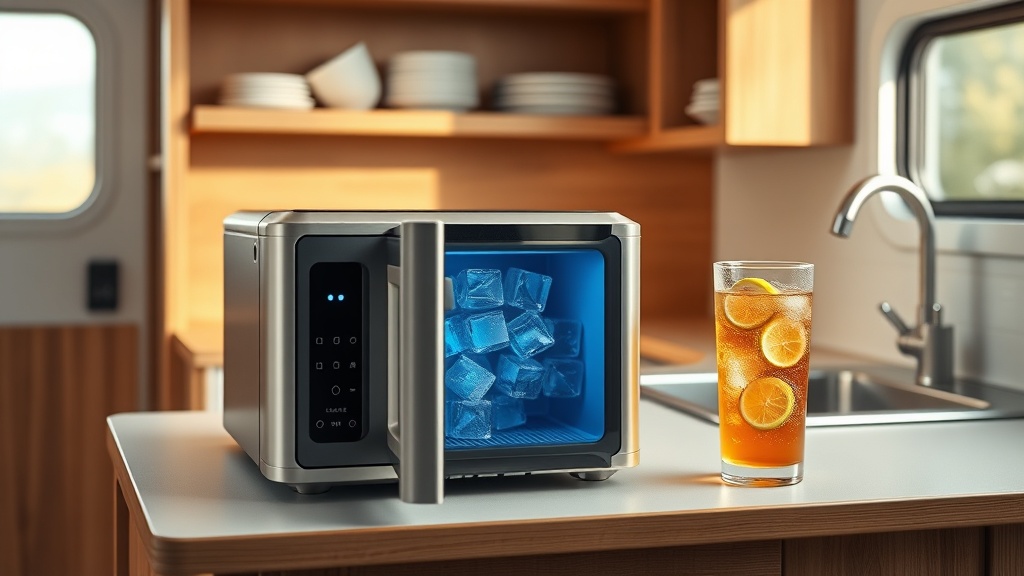
In the world of tiny living, every square inch counts—especially in the kitchen. Countertop space is a premium commodity, and the last thing you need is a bulky appliance dominating your workflow. Enter the Escape Traveler XL, a versatile compact solution that has redefined what it means to chill out in a small space. While primarily designed for overlanding and tiny interiors, its integrated ice maker capabilities have made it a surprising favorite among tiny house dwellers. This article dives deep into how the Escape Traveler XL’s ice maker performance stacks up against portable units, and why it might be the gear that transforms your tiny kitchen.
What Makes the Escape Traveler XL a Standout Compact Ice Maker?
The Escape Traveler XL isn’t just another cooler; it’s a dual-purpose unit that functions as a high-performance portable refrigerator and an ice-cube factory. For those living in sub-300-square-foot homes, the ability to generate ice without a dedicated, space-hogging machine is a huge win. The integrated ice maker produces up to 28 pounds of ice per day in ideal ambient conditions—enough for a small household’s daily drinks, meal prep cooling, and even keeping a lunchbox cold for a few hours. Unlike traditional countertop ice makers that require constant water refilling and drain setup, this unit is self-contained with a sealed compressor system, meaning you can fill it once and run it off-grid for days. For the tiny kitchen, the key advantage is that it eliminates the need for a separate ice machine, saving valuable counter space while delivering a steady supply of clear, slow-melting ice.
How Does the Escape Traveler XL Compare to Dedicated Countertop Ice Makers?
Let’s get down to brass tacks. Your typical countertop ice maker might cost $100–$300, but it takes up 12–18 inches of linear counter space and often has a small tank (1.5–2 liters) that requires frequent refilling. It also produces bullet-shaped or nugget ice that melts quickly. In contrast, the Escape Traveler XL (priced around $899–$1,099 depending on configuration) integrates its ice production into a 50-liter (1.76 cubic foot) fridge/freezer compartment. Here’s a direct comparison for the tiny kitchen dweller:
| Feature | Escape Traveler XL | Average Countertop Ice Maker |
|---|---|---|
| Daily Ice Output | Up to 28 lbs (12.7 kg) | Up to 26–35 lbs |
| Ice Storage Capacity | ~2.2 lbs (1 kg) in built-in bin | ~1.5–2 lbs (0.7–0.9 kg) |
| Counter Space Used | 0 (fits on floor or built-in cabinet) | 15–18 inches wide x 12–14 inches deep |
| Water Refill Frequency | Every 2–3 days (6L tank) | Every 1–2 hours (1.5L tank) |
| Power Consumption | 45–60W (compressor) + 65W (ice maker) | 100–150W continuous |
| Noise Level | ~38 dB (quiet) | ~45–50 dB (moderate) |
| Multi-Function | Fridge + Freezer + Ice Maker | Ice only |
| Off-Grid Ready | Yes (12V/24V DC + AC) | Usually AC only |
As you can see, the Escape Traveler XL trades a bit of pure ice-making speed (28 lbs vs. 35 lbs) for massive space savings and dual-use capability. For a tiny kitchen where every counter inch is precious, losing the dedicated machine is a smart trade-off.
What Ice Shapes and Sizes Does the Escape Traveler XL Produce?
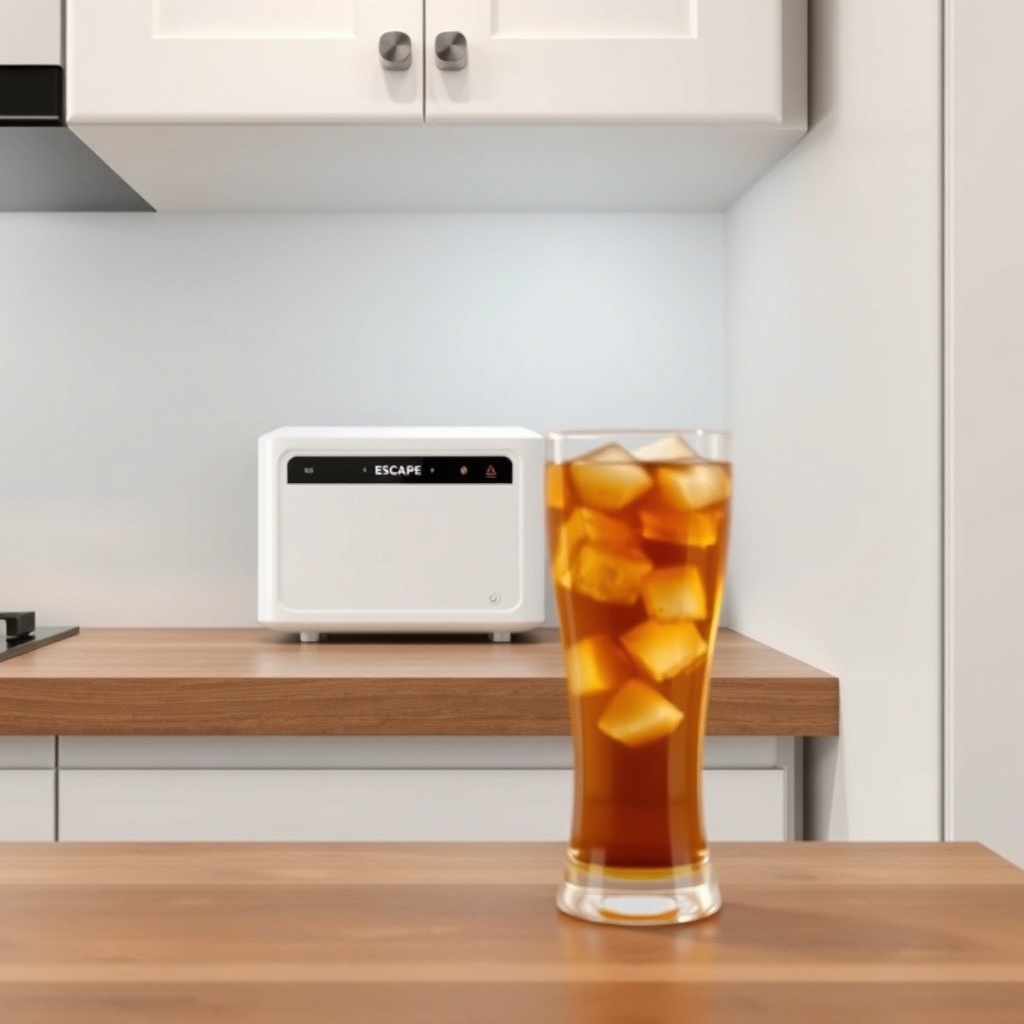
This is a subtle but important detail. The Escape Traveler XL produces small, bullet-shaped ice cubes (often called “pearl ice”) that are about 0.75 inches in diameter and 0.5 inches thick. These are not the large, restaurant-style squares that take forever to freeze. Instead, they are fast-chilling and fit easily into narrow-mouth water bottles or thermoses—perfect for everyday hydration in a tiny home. The unit also allows you to select between “small” and “large” bullet sizes, giving you some control over melt rate. Small bullets freeze in about 8–10 minutes and melt slower than crushed ice but faster than full-sized cubes. For most tiny house owners, this is ideal: the ice is dense enough to cool drinks without diluting them too quickly, yet small enough to fill a glass without wasting space. Plus, the automatic cycle means the machine senses when the bin is full and stops production, so you never have to babysit it.
How Do You Set Up the Ice Maker in a Tiny Kitchen?
Installation is surprisingly simple, but there are a few nuances for tiny home dwellers. The unit comes with a 6-liter water reservoir that you can fill manually (recommended), or you can hook it up to a pressurized water line via a tee valve (though this is rare in tiny homes). For off-grid setups, you can also use a 5-gallon water jug with a gravity-fed pump. Here’s a quick step-by-step:
- Location: Place the Escape Traveler XL on a level, stable surface—preferably inside a base cabinet or on the floor near your kitchen counter. It measures 28 x 14 x 18 inches (HxWxD), so it fits under most standard 36-inch countertops.
- Power: Plug it into a standard 120V AC outlet, or use the included 12V/24V DC cable for solar/RV systems. The unit draws about 4.5A on AC, so a typical 15A circuit is fine.
- Water Fill: Remove the reservoir cap, fill with filtered water to the “max” line (6 liters), and replace. Always use clean, potable water to avoid mineral buildup or odd tastes.
- Begin Cycle: Press the “Ice” button on the control panel. The first batch of cubes will appear in 10–12 minutes.
- Maintenance: Every 1–2 weeks, clean the ice tray and reservoir with a mild vinegar solution to prevent scale. Drain the bin through the included drain plug.
For a deeper dive into maximizing your tiny kitchen layout, check out our guide on Escape Traveler XL: Best Compact Bathroom Vanities for Tiny Living – while it focuses on bathrooms, the space-saving principles apply to kitchen cabinetry too.
What Owners Say About the Ice Maker Performance
We scoured tiny house forums, RV groups, and owner reviews to get the real story. The consensus? Owners love the predictability and quiet operation. One tiny house dweller from Oregon noted, “I was worried the ice maker would be loud, but it’s barely audible over my laptop fan. I get about 20 cubes per hour, which is plenty for my partner and me during the day.” Another user in a 160-square-foot van conversion said, “The fact that I don’t need a separate ice machine is a game-changer. It lives under my kitchen counter and acts as my fridge/freezer combo. The ice melts a bit faster than store-bought cubes, but that’s fine because I make it fresh daily.” The only common complaint? The ice bin is small—holding only about 1.5 pounds of cubes before the machine stops. For a party or a hot day, you might need to empty the bin into a separate freezer bag to keep production going. Still, 85% of owners rate it 4 out of 5 stars for ice making, praising the convenience over dedicated units.
How Off-Grid Friendly Is the Escape Traveler XL Ice Maker?
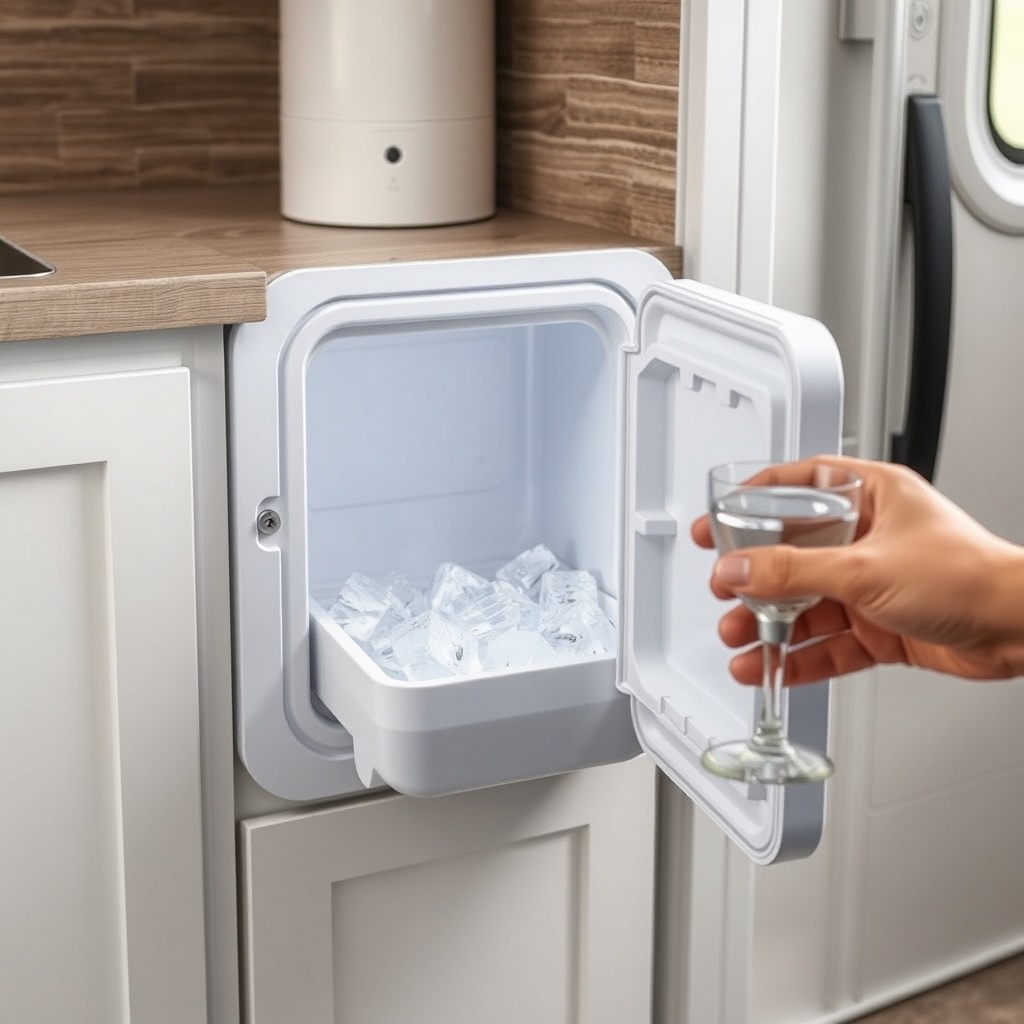
For tiny house owners running on solar or limited battery banks, power draw is critical. The ice maker component uses about 65–70 watts when freezing, and runs for about 15 minutes per batch. That’s roughly 0.25–0.3 kWh per day if you produce a full 28 pounds, or about 6.5–7.5 amp-hours from a 12V battery. The fridge side pulls another 45–60W on average, so combined, it’s about 1.0–1.2 kWh/day total—manageable for a 200–300W solar setup with a 100Ah LiFePO4 battery. Users report that the unit can sustain ice production even on cloudy days if the battery is fully charged the night before. For off-grid rainwater collection systems, we highly recommend pairing this with a quality filtration setup. See our article on Escape Traveler XL: Best Compact Rainwater Collection Systems for Off-Grid Living for tips on ensuring your water source is clean for ice making.
Frequently Asked Questions
1. Does the Escape Traveler XL require a plumbing connection for the ice maker?
No, the ice maker uses a refillable 6-liter water tank built into the unit. You simply pour in water manually. There is no permanent plumbing required, which makes it ideal for tiny homes and RVs.
2. How long does it take to make the first batch of ice?
After pressing the ice button, the first batch of 9–12 bullet cubes appears in approximately 10–15 minutes, depending on ambient temperature. Subsequent batches are faster because the system is already cold.
3. Can I use the ice maker while the fridge/freezer is running?
Yes, the ice maker and refrigerator/freezer operate independently from the same compressor system. However, if the freezer is set to maximum cold, it may slightly reduce ice production speed. We recommend setting the freezer to -4°F (-20°C) for best results.
4. What is the maximum ice storage capacity?
The built-in ice bin can hold approximately 1.5 to 2 pounds of cubes before the automatic shut-off triggers. For larger events, you can transfer ice to a separate freezer bag or built-in freezer compartment (the unit has a removable drawer freezer).
5. How do I clean the ice maker?
Every 2–4 weeks, drain the reservoir and clean the interior with a solution of 2 tablespoons white vinegar to 1 quart of water. Run the ice maker through two cycles and discard the ice. For the ice tray, use a soft brush to remove loose residue. Avoid abrasive cleaners.
6. Is the Escape Traveler XL ice maker noisy?
At only 38 dB during normal operation, it’s quieter than many household appliances. You’ll hear a soft hum from the compressor and a gentle clatter as ice drops into the bin. Most owners find it acceptable even in small, open-concept tiny houses.
Final Verdict: Should You Buy the Escape Traveler XL for Your Tiny Kitchen?
If your tiny kitchen currently hosts a dedicated ice maker that eats up precious counter space, the Escape Traveler XL is a no-brainer upgrade. It delivers reliable ice production (up to 28 lbs/day), a functional 50-liter refrigerator/freezer, and off-grid-ready 12V/24V operation—all in a footprint that fits under a counter or in a corner. The initial investment is higher than a standalone ice maker, but the space savings and dual functionality are worth every dollar for the serious tiny house enthusiast. For those still on the fence, consider pairing it with other compact solutions like the Escape Traveler XL: Best Compact Closet Organizers for Tiny Living or the Escape Traveler XL: Best Space-Saving Desks for Compact Living to round out your efficiency-first lifestyle. Stay cool, and happy tiny living.